CN

Product Center

Green Innovation · Scientific and Technological Development · Industrial Responsibility · Joint Construction of Civilized Ecology

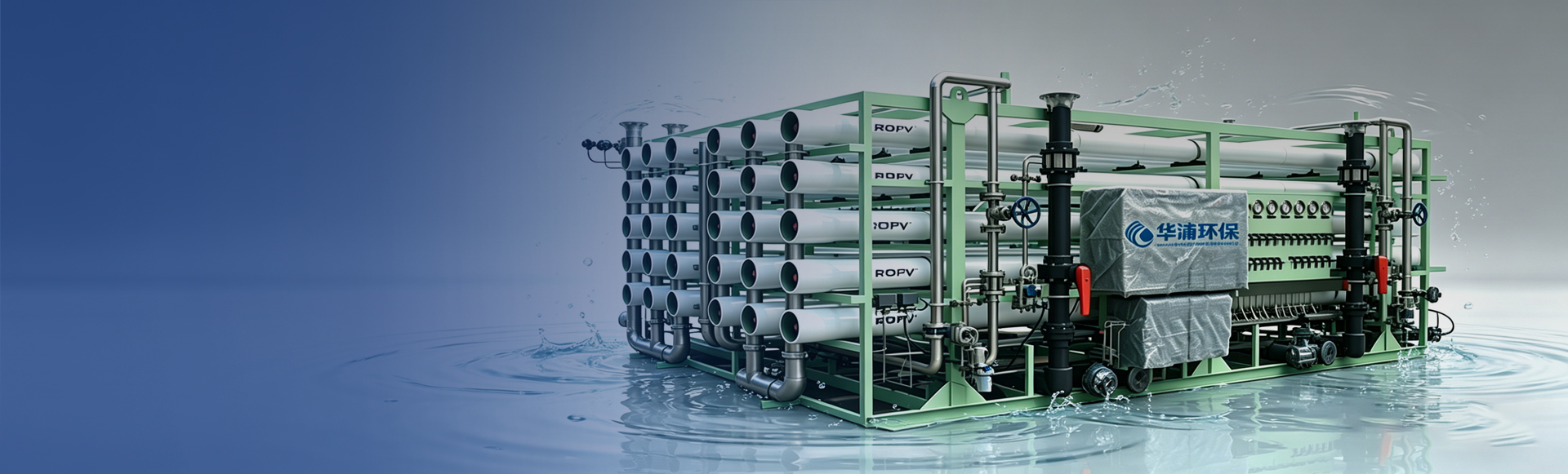
Electrochemical Multi-Dimensional Catalytic Oxidation Equipment

The electrochemical multi-dimensional catalytic oxidation equipment is widely used in the pretreatment or advanced treatment stages of various industrial wastewaters, including chemical, pharmaceutical, printing and dyeing, papermaking, coking, pesticide, electroplating, and landfill leachate industries, as well as in centralized wastewater treatment and water reuse projects in industrial parks. It is particularly suitable for high-concentration organic wastewater with a low BOD/COD ratio and containing refractory organic compounds such as benzene rings. It can serve as a pretreatment unit to enhance biodegradability (increasing the B/C ratio to above 0.3), thereby creating favorable conditions for subsequent biochemical processes. It can also act as an advanced treatment unit for biochemical effluent, achieving significant COD reduction and efficient color removal, meeting stringent discharge standards such as Class 1A.

National Service Hotline:400-611-6861
Product Introduction

The Fenton reactor is a water treatment equipment based on Fenton advanced oxidation technology. It catalyzes the decomposition of H ₂ O ₂ by Fe ² ⁺ to produce highly oxidative hydroxyl radicals (· OH), which attack organic molecules without selectivity, causing them to mineralize into CO ₂ and H ₂ O or degrade into easily biodegradable small molecule organic compounds, efficiently removing difficult to biodegrade organic compounds. The mainstream product types include: traditional stirred tanks (simple structure, suitable for small and medium water volume), continuous flow reactors (high degree of automation, suitable for medium and large sewage treatment plants), fluidized bed Fenton reactors (filled with carriers such as quartz sand and activated carbon in tower reactors, allowing Fe ³ ⁺ to crystallize on the surface of the carrier to form FeOOH heterogeneous catalysts, achieving partial substitution of Fe ² ⁺, greatly reducing dosage and iron sludge production), and electric Fenton reactors (achieving in-situ regeneration of Fe ² ⁺ and reducing sludge volume through cathodic electrochemical reduction).

Technical Advantage
High COD removal rate
Hydroxyl radicals have extremely strong oxidation ability, and the COD removal rate of difficult to degrade organic matter can reach 50%~90%, which can effectively treat pollutants that are difficult to degrade by traditional biochemical processes.
Enhance biodegradability
By increasing the B/C ratio from below 0.2 to above 0.3, the subsequent biochemical treatment effect can be improved, and the B/C ratio of the wastewater after the reaction can be increased by over 0.2.
Good decolorization effect
It can effectively destroy the color generating groups of dyes, and the COD of printing and dyeing wastewater can be reduced from 600mg/L to below 90mg/L in deep treatment, with a color removal rate of over 90%.
Reduce operating costs
Fluidized bed Fenton technology can reduce the amount of chemicals added by more than 30% and the amount of sludge generated by more than 50%, reducing treatment costs by about 60%.
Small facility footprint
By integrating design to improve processing efficiency, the footprint is only 1/3 to 1/2 of traditional processes.
High degree of automation
equipped with online pH meters, ORP meters and other sensors, and PLC automatic control system to achieve precise control of dosing and process parameters, reducing manual intervention.
Working Principle
Process Selection

1. Selection by treatment stage: For the pretreatment of high concentration refractory organic wastewater, traditional Fenton or Fenton fluidized bed reactors are preferred to significantly improve biodegradability; Upgrading the advanced treatment of biochemical effluent by using electric Fenton or low-dose Fenton reactors to reduce operating costs; For emergency response, a mobile integrated Fenton reactor is selected, which can be quickly deployed and put into use.

2. Select based on water quality characteristics: For high concentration wastewater with COD concentration>2000mg/L, use traditional Fenton reactor; For medium concentration wastewater with COD concentration of 500-2000mg/L, Fenton fluidized bed reactor is selected; For low concentration deep treatment wastewater with COD concentration<500mg/L, electro Fenton or photo Fenton reactors should be used; Wastewater containing high concentrations of chloride ions should be treated with titanium or PTFE lined reactors, and reaction conditions should be controlled to avoid the production of chlorine gas.

3. Selection based on processing scale: For small-scale projects with a daily processing capacity of less than 500m ³, an integrated steel Fenton reactor should be selected; For medium-sized projects with a daily processing capacity of 500-5000m ³, a combination of reinforced concrete tank body and modular equipment is selected; For large-scale projects with a daily processing capacity>5000m ³, a multi grid parallel Fenton reaction tank design is adopted.

4. Selection according to process combination: The front-end needs to be matched with pH adjustment and coagulation pretreatment to remove suspended solids and large particle impurities; The backend must be equipped with a neutralization and precipitation system to remove the iron sludge generated by the reaction; For projects with extremely high effluent requirements, a combination process of "Fenton+activated carbon adsorption" or "Fenton+ultrafiltration" can be used.



Equipment Selection

Parameter Description and Selection Points

The processing scale and selection method are determined based on the daily processing capacity to determine the equipment specifications. Before selection, it is advisable to verify the process parameters (residence time, dosage ratio) through small-scale experiments, and then calculate according to the effective volume formula; The retention time for high concentration and difficult to degrade wastewater with COD>10000mg/L can be set at 1-2 hours, while the retention time for low concentration or pretreatment can be set at 0.5-1 hour

The integrated equipment with a single processing capacity covers a processing capacity of 5-200m ³/h. Large projects use tower reactors with a single processing capacity of up to 1-2000m ³/d, and larger water volumes can be connected in multiple groups in parallel; Effective volume needs to reserve 10%~20% fluctuation margin

Material selection: 316L stainless steel: suitable for strong corrosion and high temperature conditions, with a service life of over 8 years; Fiberglass reinforced plastic (FRP): acid resistant pH 2-4, high cost-effectiveness, lightweight and high-strength

Vertical tower structure (mainstream, fluidized bed specific), horizontal structure (low flow rate), integrated pry mounting (suitable for small and medium-sized, quick installation)

Stirring/Mixing Method: Mechanical Stirring: 50200rpm, with frame or paddle impellers, 316L stainless steel is recommended for underwater components; Pneumatic stirring: assisted by micro aeration, the reaction time can be shortened to 1-2 hours; Jet mixing: High speed jet enhances mass transfer, achieving instantaneous generation and efficient uniform mixing of · OH

Perforated water pipes or nozzle water distributors are installed at the bottom of the water distribution system to ensure even distribution of water and chemicals; The fluidized bed needs to be equipped with a circulating pump to achieve reflux (circulation ratio R=1-3), in order to maintain the fluidized state of the carrier

The dosing system is equipped with FeSO ₄ storage tank, H ₂ O ₂ metering tank, and electromagnetic diaphragm metering pump. The dosing ratio can be adjusted according to the Fe ² ⁺: H ₂ O ₂ molar ratio of 1:1~1:10. At the same time, pH adjustment (acid/alkali addition) and PAM flocculant dosing module are also provided

At least pH meter (reaction section control 2.5-4.0), ORP meter (400-600mV), and temperature sensor should be equipped for online monitoring instruments. COD online instrument can be added to the deep processing section and connected to the PLC system to achieve fully automatic closed-loop control

The subsequent treatment effluent should be equipped with neutralization tank (pH adjusted to 6-9), coagulation sedimentation tank/air flotation tank (to remove iron sludge, effluent SS ≤ 50mg/L), and reducing agent dosing unit (to control residual H ₂ O ₂)

The iron containing sludge generated by Fenton sludge treatment is generally managed as hazardous waste and needs to be collected separately, dehydrated, and handed over to qualified units for disposal. It is not suitable to mix it with biochemical residual sludge for treatment

Following the standard HJ 1095-2020 "Technical Specification for Fenton Oxidation Wastewater Treatment Engineering" (implemented by the Ministry of Ecology and Environment on January 14, 2020)