CN

Product Center

Green Innovation · Scientific and Technological Development · Industrial Responsibility · Joint Construction of Civilized Ecology

Ceramic membrane filtration device

Ceramic membrane filtration devices are widely used in precision separation and purification processes in industrial fields such as chemical, pharmaceutical, water treatment, and food processing due to their high temperature resistance, corrosion resistance, and high filtration accuracy. In the food and beverage industry, it can be used for clarification, sterilization, and concentration of alcoholic beverages, juices, soy sauce, and vinegar to remove impurities and preserve flavor; In the field of biomedicine, it is used for filtering and sterilizing biological fermentation broth, refining traditional Chinese medicine extracts, separating and extracting enzyme preparations, and recovering catalysts (such as palladium charcoal). In the field of environmental protection and water treatment, this device is the core equipment for treating oily wastewater, coking wastewater, heavy metal wastewater, and leachate from garbage. It is also an ideal choice for reclaimed water reuse, reverse osmosis pretreatment, and circulating cooling water purification.

National Service Hotline:400-611-6861
Product Introduction

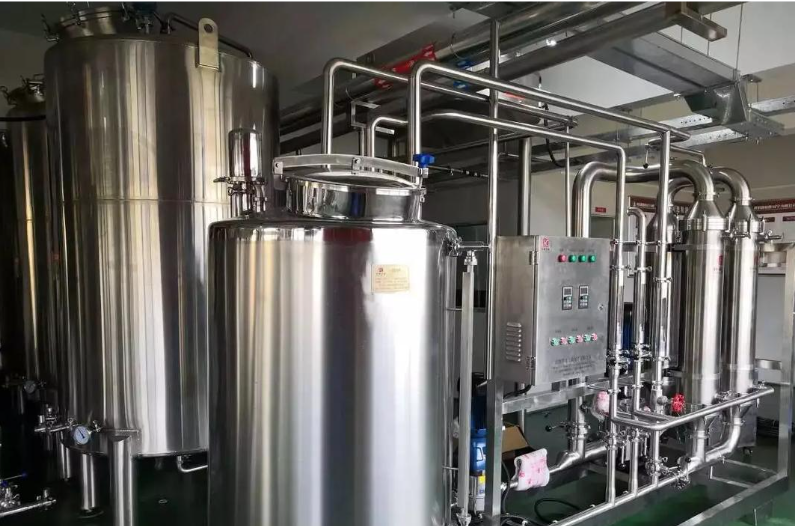
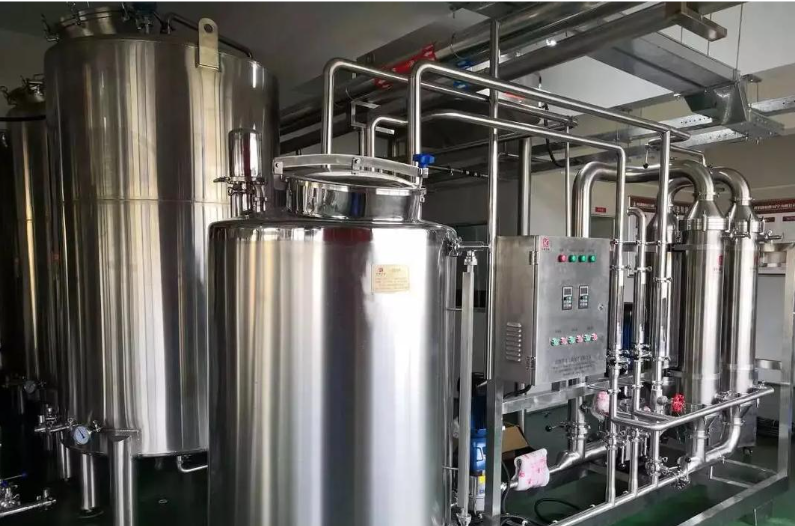
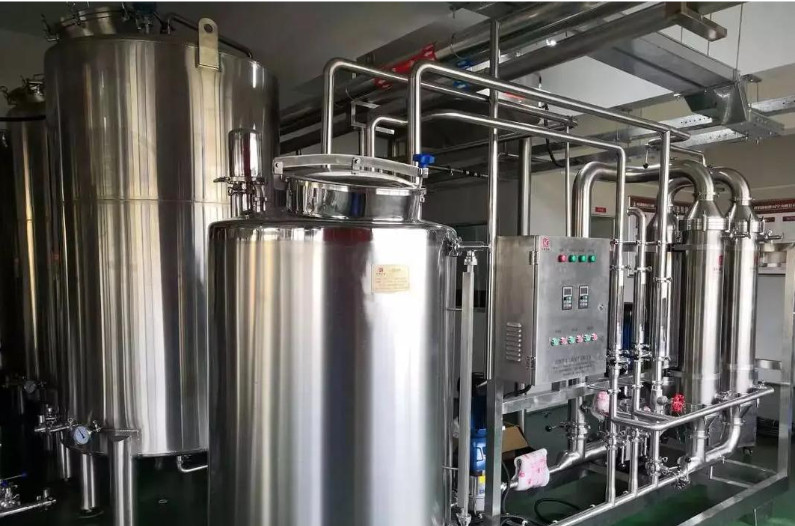
Ceramic membrane filtration device is an efficient and precise filtration equipment with inorganic ceramic materials (such as alumina, zirconia, etc.) as the core filtration elements. The core filtration mechanism is a "cross flow filtration" process: the raw material liquid flows at high speed inside the membrane tube, and under pressure, small molecular components (filtrate) pass through the membrane layer, while large molecular components (concentrate) are intercepted, thereby achieving separation, concentration, and purification of the mixture. Ceramic membrane components have a classic asymmetric three-layer structure, including a porous support layer for support, an intermediate layer for transition, and a membrane layer for separation and precision control. According to the pore size of the membrane, the product can be divided into series such as microfiltration membrane, ultrafiltration membrane, and nanofiltration membrane to meet different process requirements from clarification to fine separation.

Technical Advantage
Excellent chemical resistance
Ceramic membrane materials (such as alumina and zirconia) have extremely strong chemical stability and can be used for a long time in strong acid and alkali environments with pH 0-14.
Excellent thermal stability
The equipment can typically operate in environments exceeding 150 ℃, and some specially designed ceramic membrane components can even withstand high temperatures up to 800 ℃, making them suitable for high-temperature materials or conditions that require high-temperature steam disinfection.
Efficient separation performance
With high filtration accuracy, covering microfiltration, ultrafiltration to nanofiltration levels, it can effectively remove bacteria, suspended solids, macromolecular colloids, and some viruses. The removal rate of emulsified oil can reach over 90%, ensuring excellent effluent quality.
Long lifespan and renewability
Due to the stability of the material, the service life of ceramic membranes is usually 2-3 times that of organic membranes. It has strong anti pollution ability and is easy to restore membrane flux after chemical cleaning and high-temperature steam disinfection.
Automation and airtightness
Equipment usually adopts a fully enclosed design, integrated with PLC automatic control system, which can achieve automated operation, reduce manual operation, and avoid the risk of secondary pollution of materials.
Process Selection

1. Selection based on interception accuracy: Select 0.1-10 μ m microfiltration ceramic membranes for removing suspended solids, bacteria, and large colloidal particles; Select 0.01-0.1 μ m ultrafiltration ceramic membrane for removing small molecule organic matter, viruses, and colloids; Nanofiltration grade ceramic membranes are suitable for desalination and separation of small molecule organic compounds.

2. Selection based on structural form: For materials with high concentration, high viscosity, and high solid content, tubular ceramic membranes are preferred, which have strong anti pollution ability and are easy to clean; Flat or hollow fiber ceramic membranes with high packing density can be used for low concentration and large processing capacity feed solutions.

3. Material selection: Conventional water treatment and food industries use alumina ceramic film, which has high cost-effectiveness; Choose silicon carbide ceramic film for strong corrosion or high temperature working conditions; Zirconia ceramic film is selected for applications that require high wear resistance and chemical stability.

4. Selection by application field: Sanitary grade ceramic membrane devices are selected for the food and beverage and pharmaceutical industries, which comply with GMP standards; The chemical and metallurgical industries use industrial grade ceramic membrane devices, equipped with anti-corrosion and explosion-proof systems; The water treatment industry uses standard ceramic membrane devices with high integration and stable operation.

5. Selection based on processing scale: For small-scale or pilot projects, small devices with single or multiple membrane modules connected in parallel should be selected; The industrial production project adopts modular combination devices, which can flexibly increase or decrease the number of membrane components according to the processing capacity.


Equipment Selection

Parameter Description and Selection Points

Equipment types are divided into tube type, flat plate type, and disc tube type according to the form of membrane components, with tube type membranes being the most common in industrial applications

Choose aluminum oxide (Al ₂ O3) as the membrane material for normal working conditions; Choose zirconia (ZrO ₂) for strong corrosion conditions; Select titanium oxide (TiO ₂) for specific anti pollution requirements

Design a processing capacity of 0.5-210m ³/h and calculate the required membrane area based on the design flow rate and membrane flux. Common models vary from 10t/h, 20t/h, 50t/h, 80t/h

Processing capacity - tank size corresponds to 10t/h: Φ 800; 20t/h:Φ1200; 30t/h:Φ1400; 50t/h:Φ2200; 100t/h:Φ3000

The maximum working pressure of conventional equipment designed for pressure is 1.0MPa

Design temperature: A-type 5-95 ℃, B-type 5-200 ℃

Main material: Conventional working condition carbon steel anti-corrosion or carbon steel lining adhesive; Corrosion resistant/food grade working condition 304 stainless steel; Strong corrosion high-purity working condition 316L stainless steel

Membrane pore sizes of 10nm, 20nm, 50nm, 100nm, 200nm, 0.2 μ m, 0.5 μ m, 0.8 μ m, 1.2 μ m, etc. are selected according to separation requirements

Membrane channel specifications: Single channel type A: outer diameter 12mm, inner diameter 8mm; 7-channel type B: outer diameter 30mm, inner diameter 6mm; 19 channel type C: outer diameter 30mm, inner diameter 4mm; 37 channel type D: outer diameter 30mm, inner diameter 3mm

The backwash system is equipped with a dedicated backwash water tank and backwash pump. The backwash water is preferentially produced by the membrane system, and the designed backwash pressure is 0.2-0.3MPa

The core components of the complete equipment include membrane elements, membrane shells and end caps, circulating liquid pumps, cleaning systems, PLC control systems, and supporting pipeline valves and instruments

Installation method: vertical or pry integrated. Carbon steel equipment: fixed with anchor bolts; Stainless steel equipment: overall lifting or prying into place

The overall compliance of the standard device should comply with GB/T 37795-2019; Pressure vessels shall comply with GB150. Tubular ceramic membrane components shall comply with HY/T 104-2008 "Ceramic Microporous Membrane Membrane Components"