CN

Product Center

Green Innovation · Scientific and Technological Development · Industrial Responsibility · Joint Construction of Civilized Ecology

PYQT series dual effect energy-saving stripping and deamination

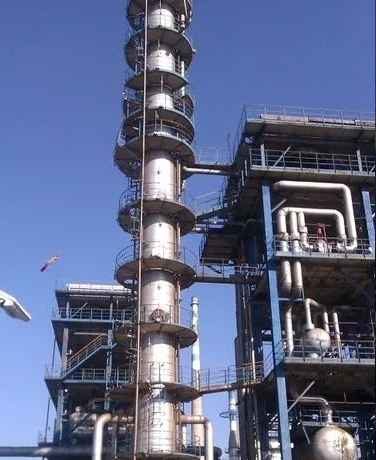
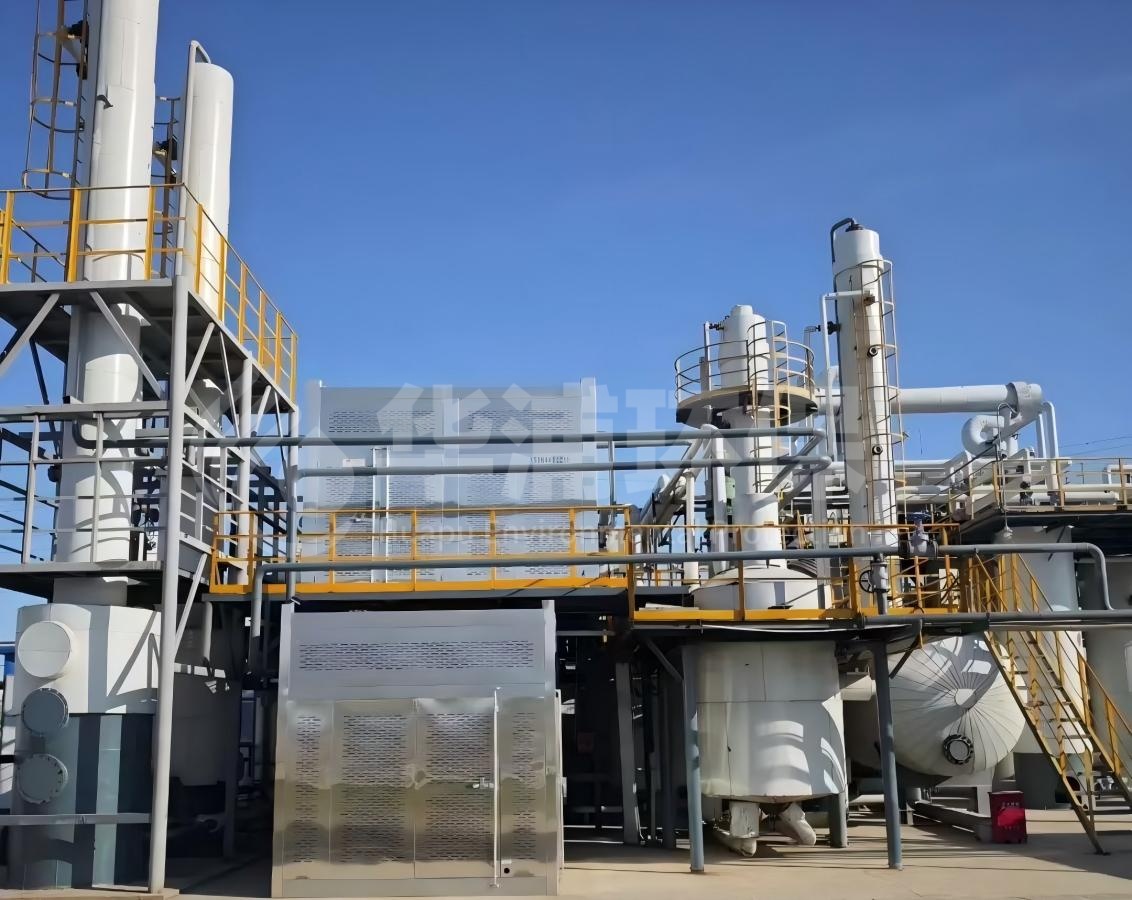
The PYQT series dual effect energy-saving stripping and deamination device is mainly designed for the standard discharge and resource recycling of high concentration industrial ammonia nitrogen wastewater. Suitable for the treatment of high concentration ammonia nitrogen wastewater in industries such as pesticide and pharmaceutical intermediate production wastewater, catalyst and rare earth and non-ferrous metal smelting wastewater, coal chemical and coking wastewater, lithium battery and new energy material production wastewater, as well as landfill leachate, chemical pharmaceuticals, livestock and poultry breeding, etc. This device is suitable for working conditions where the concentration of ammonia nitrogen in wastewater is greater than 1000mg/L and the wastewater flow rate is ≥ 10m ³/h. It can treat high concentration ammonia nitrogen wastewater to standard discharge (<15mg/L) in one go, with a treatment capacity covering 10-2000m ³/d, and can widely adapt to the treatment and resource utilization needs of various high concentration industrial ammonia nitrogen wastewater. Transforming demand.

National Service Hotline:400-611-6861
Product Introduction

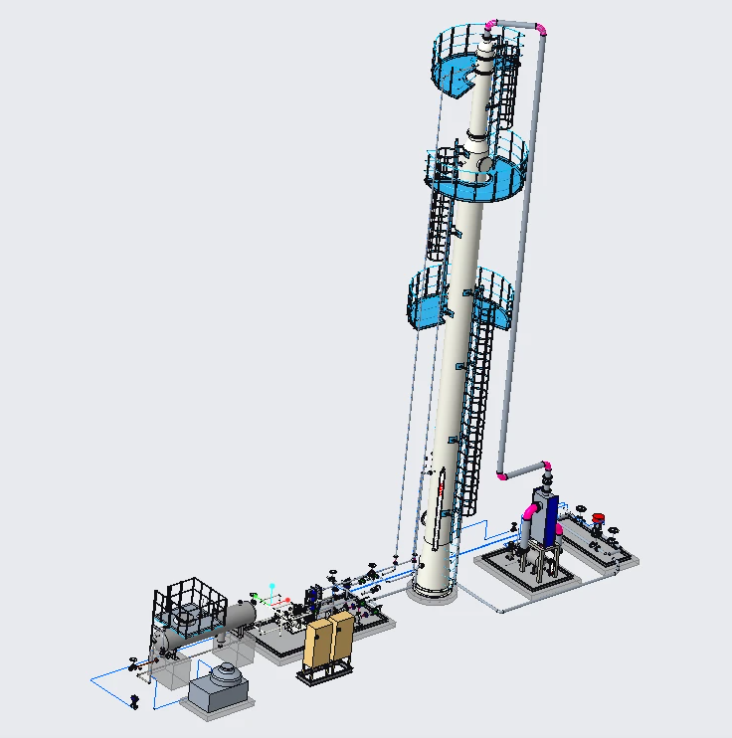
Organically coupling the operation of stripping and distillation units to achieve high ammonia nitrogen removal and resource recovery under low energy consumption conditions through dual effect energy-saving technology. The device mainly consists of a first stage stripping distillation tower, a second stage stripping distillation tower, a first stage tower kettle liquid storage tank, a second stage tower kettle liquid storage tank, an energy-saving device, a tower top condenser, a material inlet and outlet heat exchanger, a tower top reflux tank, and a supporting pump valve system. The core working principle is to first adjust the pH of the wastewater to alkaline, converting ammonium ions into free ammonia. The wastewater is preheated by a heat exchanger and enters the first effect tower, where high-temperature steam is used for stripping and distillation to remove some ammonia; The effluent from the kettle of the first effect tower enters the second effect tower for further deamination. The ammonia containing steam at the top of the first effect tower serves as the heating source for the reboiler of the second effect tower, achieving graded and cascaded utilization of thermal energy; The ammonia containing steam extracted from the top of the tower can be condensed to obtain 10%~20% concentrated ammonia water or high concentration ammonia gas for recovery. The ammonia nitrogen in the effluent of the tower kettle can be stably reduced to below 15mg/L, meeting the national first-class emission standard. As the industrialization promotion unit of this technology, Pulang Membrane has successfully applied the dual effect energy-saving stripping and deamination technology to the field of high ammonia nitrogen wastewater deamination pretreatment. The device has achieved series, complete set, modular, and fully automated operation.


Technical Advantage
High deamination efficiency
High concentration ammonia nitrogen wastewater with ammonia nitrogen content above 60000mg/L can be treated in one go to below 15mg/L (meeting the national first-class discharge standard), with a minimum of 5mg/L or below, and the deamination efficiency is at the leading level in the industry.
Low steam consumption and significant energy saving
Adopting dual effect energy-saving technology to effectively utilize system heat, the steam consumption for treating ammonia nitrogen wastewater is reduced by about 40% on the basis of high-efficiency and energy-saving steam distillation and deamination complete technology, generally ranging from 90-110kg/ton of wastewater, while the steam consumption of traditional steam distillation and deamination technology is generally 250-300kg/ton of wastewater.
Resource recycling and utilization
Resource recycling and utilization: Ammonia nitrogen in wastewater can be recycled and reused in the form of 10% -20% concentrated ammonia water, high concentration ammonia gas, or liquid ammonia for production or direct sales, achieving an organic combination of pollutant treatment and resource recycling, turning waste into treasure.
Simple process and compact equipment
Integrating the distillation process into a dual tower composite structure reduces the number of equipment and intermediate links compared to traditional single tower distillation technology. The device occupies a small area and has a reasonable investment. Fully automatic operation and easy management: The device is designed to be complete, modular, and automated, and can operate continuously without the need for dedicated personnel. It is easy to operate and control, and runs stably and reliably.
Wide range of applicable water quality
It can treat ammonia nitrogen concentrations in wastewater ranging from 1000mg/L to 60000mg/L. It can not only meet the one-time standard for treating high concentration ammonia nitrogen wastewater, but also serve as a pretreatment unit for high ammonia nitrogen wastewater, with a wide range of applications.
Process Selection

1. Selection based on influent ammonia nitrogen concentration: Standard PYQT device is selected for influent ammonia nitrogen concentration of 1000-5000mg/L; The enhanced PYQT device is selected for the influent ammonia nitrogen concentration of 5000-20000mg/L; If the influent ammonia nitrogen is greater than 20000mg/L, a deep recovery PYQT device can be selected, and a distillation system can be configured to obtain higher concentration ammonia water.

2. Selection based on processing scale: For small projects with processing capacity<10m ³/h, an integrated pry mounted PYQT device is selected, which can be transported and installed as a whole; For medium-sized projects with a processing capacity of 10-100m ³/h, modular combination devices are selected; Large projects with a processing capacity greater than 100m ³/h adopt a multi tower parallel design.

3. Select according to the effluent requirements: The effluent requirements should meet the Class A standard of the Comprehensive Wastewater Discharge Standard (ammonia nitrogen ≤ 15mg/L) and select the standard type; The effluent requires ammonia nitrogen to be ≤ 5mg/L, and a reinforced type should be selected to increase the depth of the ammonia removal unit; The effluent requires ammonia nitrogen to be ≤ 3mg/L, and the "dual effect stripping+fine filtration" combination process is selected.

4. Selection based on industry water quality characteristics: PYQT-S type equipment with acid removal pretreatment is selected for sulfur-containing and ammonia containing wastewater from coking and coal chemical industries; The PYQT-Z device with pre-treatment is selected for ammonia nitrogen wastewater containing complex organic compounds in pharmaceuticals and pesticides; The PYQT-L device with ultrafiltration pretreatment is selected for garbage leachate.


Equipment Selection

Parameter Description and Selection Points

The wastewater treatment capacity of a single unit is generally ≥ 10m ³/h, and the tower diameter and height are determined according to the design water volume. If the flow rate is too small, the thermal efficiency will decrease. It is recommended that small and medium-sized projects collect multiple streams of wastewater into a regulating tank for centralized treatment; Large scale projects can adopt multi tower parallel connection, with existing projects covering scales such as 15m ³/h (pesticide factory) and 8m ³/h (foreign-funded catalyst factory)

Select the technical route based on the processing target for equipment type: PYQT dual effect energy-saving steam stripping deamination (energy-saving, recycling concentrated ammonia water); Steam extraction distillation deamination (BUCT-SRAT, single effect, steam consumption of 150-180kg/ton of wastewater); Steam cycle coupled with dual effect evaporation (recovering ammonium sulfate). In the project, the selection can be based on water quality, site, and investment budget

The structural parameters of the tower are that the deamination tower is a plate tower or a packed tower; Theoretical number of trays: 10-18 for first effect towers and 8-15 for second effect towers, determined based on ammonia nitrogen concentration and treatment requirements; The tower diameter is determined by calculating the vapor-liquid load; Tower height 12-25m

Internal material of tower: 304/316L stainless steel tray/packing, 316L stainless steel distributor and demister

Heat exchanger selection: Plate heat exchanger or shell and tube heat exchanger; The area of the material inlet and outlet heat exchanger is calculated based on the flow rate and temperature difference. The cold side inlet water is at room temperature (~25 ℃), and the hot side tower kettle outlet water is ≥ 90 ℃; The tower top condenser is cooled by circulating cooling water. The material of the heat exchanger is 316L stainless steel or titanium, which is resistant to high temperature and high pH corrosion

The tower top condensation system is equipped with a tower top condenser, a secondary condenser, a reflux tank, and a reflux pump; The condensation temperature is controlled at 40-60 ℃, so that the ammonia containing steam condenses into concentrated ammonia water (10%~20%), and the non condensable gas (if any) is treated by tail gas absorption

Recycled ammonia solution with a concentration of 10% to 20% can be adjusted according to user needs, including reflux ratio and condensation temperature control

Steam consumption: The unit consumption of steam is generally 90-110kg/ton of wastewater, and the direct steam cost per ton of water is about 18-27 yuan (calculated at a steam price of 200 yuan/ton), which is 40% -45% lower than traditional steam stripping and deamination

The steam quality requirements are saturated steam with a pressure of 0.4~0.8MPa and a temperature of 150~175 ℃. If the boiler steam pressure is insufficient, a steam booster device needs to be added

The circulating cooling water flow rate of the cooling water system is calculated based on the tower top condenser and heat exchanger, with a cooling water supply temperature of ≤ 32 ℃ and a return water temperature of ≤ 40 ℃; Evaporation loss and discharge amount are approximately 1.5% to 2% of the circulation amount


The circulating cooling water flow rate of the cooling water system is calculated based on the tower top condenser and heat exchanger, with a cooling water supply temperature of ≤ 32 ℃ and a return water temperature of ≤ 40 ℃; Evaporation loss and discharge amount are approximately 1.5% to 2% of the circulation amount

Automatic control system PLC fully automatic control system, equipped with online pH meter (inlet/tower kettle), temperature sensor, pressure transmitter, flow meter, liquid level gauge and other instruments; Equipped with one click start stop, automatic adjustment of alkali solution dosage, automatic control of reflux ratio, remote monitoring and fault alarm functions

Material selection for main equipment (tower body, storage tank): 304 stainless steel or 316L stainless steel (resistant to high temperature and high pH corrosion); Heat exchanger: 316L stainless steel or titanium material; Process pipeline: 304 stainless steel or 316L stainless steel; Dosing system: UPVC/PE material resistant to alkali corrosion

Installation method: The vertical steel tower is fixed to the concrete foundation with anchor bolts, and the horizontal error of the equipment foundation is ≤ 2mm/m. The overall frame support is arranged; Large scale engineering equipment can be assembled on-site, while small and medium-sized projects can adopt a pry type integration to shorten the on-site installation cycle

If the by-product disposal adopts the sulfuric acid absorption process, the by-product ammonium sulfate solution can be concentrated and crystallized to make fertilizer; The remaining salt containing residual liquid needs to be disposed of according to environmental protection requirements, and the alkaline residue or sediment generated by the system should be cleaned regularly

Regularly inspect the scaling situation of the tower internals for maintenance and management (monthly inspection, depending on the hardness of the water quality); Regularly clean the heat exchanger to prevent scaling from affecting heat transfer efficiency; Calibrate online instruments to ensure automatic control accuracy; Replace vulnerable seals according to the equipment manufacturer's requirements

Following the standards GB/T 50014-2021 "Design Standard for Outdoor Drainage", GB 8978-1996 "Comprehensive Wastewater Discharge Standard", HG/T 20557-2019 "Technical Conditions for Stripping and Deamination Towers", HG/T 20559-2018 "Design Regulations for Process Systems of Chemical Plants", GB 150 "Pressure Vessels", and BUCT-DFAT Complete Technical Engineering Specification